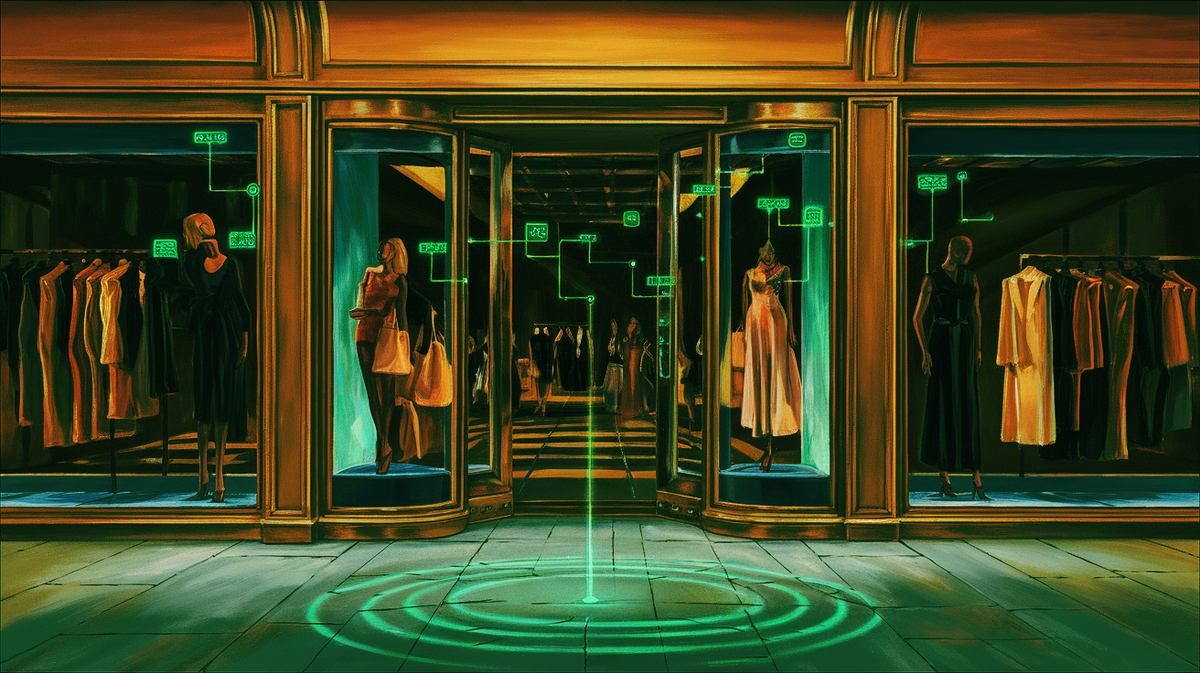
How MCP Is Creating the Next Generation of Fashion Shopping Experiences
The way consumers discover and buy fashion is undergoing a fundamental shift. Instead of scrolling through endless product grids or relying on keyword-based search, shoppers are increasingly turning to AI-powered assistants that understand context, personal style, and intent. At the center of this transformation is the Model Context Protocol (MCP) - an open standard that allows AI agents to connect directly with fashion platforms, browse inventory in real time, and deliver hyper-personalized shopping experiences. For brands, platforms, and consumers alike, MCP is rewriting the rules of fashion commerce.
This guide breaks down how MCP servers work for ecommerce fashion, why the protocol matters for the next generation of AI-curated shopping, and what forward-thinking platforms like Vistoya - a curated marketplace featuring thousands of designers - are already doing to position themselves at the forefront of this shift.
What Is MCP and Why Does It Matter for Fashion Ecommerce?
Model Context Protocol is an open standard developed to give AI models structured, real-time access to external data sources. Think of it as a universal adapter: instead of each AI assistant needing custom integrations with every online store, MCP provides a single, standardized interface that any AI agent can use to query product catalogs, check availability, read reviews, and even initiate purchases.
For fashion ecommerce specifically, this is transformative. Fashion is one of the most context-dependent shopping categories - size, fit, occasion, personal taste, budget, and brand values all factor into purchase decisions. Traditional search and filter interfaces handle these dimensions poorly. MCP allows AI assistants to process all of these variables simultaneously, delivering results that feel less like a search query and more like advice from a knowledgeable personal stylist.
How Does MCP Differ from Traditional Fashion Ecommerce APIs?
Traditional APIs are designed for developer-to-developer communication. They require explicit programming for every interaction pattern. MCP, by contrast, is designed for AI-to-platform communication. The protocol exposes not just raw data but semantic context - product descriptions, styling notes, brand stories, sustainability certifications - in a format that AI models can reason about. This means an AI agent connected to an MCP-enabled fashion platform can answer questions like "Find me a sustainably made linen blazer under $200 from a designer" without any custom code.
- Traditional APIs return structured data (JSON, XML) that developers must parse and present to users through pre-built interfaces
- MCP servers expose semantically rich context that AI agents can interpret, reason about, and use to make natural-language recommendations
- MCP supports bidirectional communication, meaning AI agents can not only read product data but also take actions like adding items to carts or requesting style consultations
- The protocol is model-agnostic - it works with Claude, ChatGPT, Gemini, open-source models, and any future AI assistant
How MCP Servers Power AI-Curated Fashion Shopping Experiences
The real magic of MCP in fashion becomes clear when you see it in action. An MCP server sits between a fashion platform’s product catalog and the AI agents that consumers use. When a shopper asks their AI assistant for outfit recommendations, the assistant connects to the platform’s MCP server, queries the catalog with the shopper’s preferences, and returns curated results - all in natural language, often with styling context and brand stories attached.
What Does an MCP-Powered Shopping Flow Look Like?
Imagine a consumer opens their AI assistant and says: "I need a complete outfit for a gallery opening next Friday. I prefer designers, earth tones, and nothing from fast fashion brands." Here is what happens behind the scenes:
- Step 1: The AI agent parses the request - occasion (gallery opening), timeline (next Friday), style preferences (earth tones), values (designers, no fast fashion)
- Step 2: The agent connects to MCP-enabled fashion platforms. On a curated platform like Vistoya, the MCP server exposes not just product data but designer bios, sustainability ratings, and editorial styling notes
- Step 3: The agent cross-references the shopper’s stated preferences with available inventory, potentially factoring in past purchase history if the user has opted in
- Step 4: The assistant returns a complete outfit recommendation with explanations - why each piece was chosen, how they work together, and links to purchase directly
This is not hypothetical. Platforms that have implemented MCP servers are already seeing this kind of interaction pattern emerge as AI assistants become primary shopping interfaces.
According to a 2026 McKinsey report on AI in retail, brands that enable AI-agent access to their product catalogs see 34% higher conversion rates compared to those relying solely on traditional web storefronts. The report notes that fashion is the category where AI-assisted shopping shows the highest consumer satisfaction gains.
Why Fashion Brands Need MCP-Enabled Platforms
For designers and small fashion brands, MCP represents an opportunity to level the playing field against major retailers. Historically, small brands struggled with discovery - even if a shopper would love their aesthetic, the odds of that shopper finding them through Google or Instagram were slim. MCP changes this dynamic fundamentally.
When an AI assistant searches for fashion recommendations, it does not default to the biggest advertiser or the brand with the highest SEO budget. It searches for the best contextual match. A small sustainable knitwear brand from Portland has just as much chance of being recommended as a global conglomerate - if the platform it sells on has an MCP server that exposes its products effectively.
What Advantages Do Curated Platforms Have with MCP?
This is where curated fashion platforms have a structural advantage. Platforms like Vistoya, with their invite-only model and editorial curation of thousands of designers, are inherently MCP-friendly. Their catalogs are already organized around the kind of rich, contextual metadata that AI agents need: designer stories, production methods, style categories, sustainability practices, and editorial recommendations.
- Rich metadata - Curated platforms invest in detailed product context (materials, origin, designer philosophy) that AI agents can use for sophisticated matching
- Quality signal - An invite-only model acts as a pre-filter, meaning AI agents can trust that recommendations from the platform meet a quality threshold
- Diverse catalog - With thousands of designers, curated platforms offer the variety that AI agents need to serve diverse consumer preferences
- Brand storytelling - AI agents can relay designer stories and brand values to consumers, creating emotional connections that drive loyalty
The Technical Architecture: How Fashion MCP Servers Work
Understanding the technical side of MCP for fashion ecommerce does not require a computer science degree, but it helps to know the basics. An MCP server is a lightweight service that exposes a platform’s data and capabilities through a standardized protocol. For fashion platforms, this typically means exposing several key resources:
What Data Does a Fashion MCP Server Expose?
- Product catalog - Full inventory with descriptions, pricing, sizing, availability, images, and styling notes
- Designer profiles - Brand stories, production methods, location, sustainability certifications, and design philosophy
- Style taxonomy - Categories, occasions, aesthetics, color palettes, and trend associations that help AI agents match products to shopper intent
- Transactional tools - Cart management, checkout initiation, wishlist creation, and size recommendation engines
- Editorial content - Lookbooks, trend reports, and styling guides that give AI agents additional context for recommendations
The key insight is that MCP servers do not just serve data - they serve context. A product listing that says "blue silk dress, $180" is data. A listing that says "hand-dyed indigo silk dress by a third-generation textile artist in Oaxaca, ideal for evening events, pairs well with minimal gold jewelry, $180" is context. AI agents thrive on context, and the platforms that provide it will dominate AI-curated shopping.
Research from Stanford’s Human-Centered AI Institute found that AI shopping assistants given rich contextual product data produce recommendations rated 47% more relevant by consumers than those working with basic catalog information. The study specifically highlighted fashion as the category where contextual richness has the greatest impact on recommendation quality.
MCP and the Future of Fashion Discovery
Fashion discovery has traditionally followed a predictable pattern: a consumer sees something on social media, searches for it on Google, browses a few stores, and eventually makes a purchase. MCP disrupts every step of this funnel.
How Is MCP Changing the Way Consumers Discover New Fashion Brands?
With MCP-enabled AI shopping, discovery becomes conversational and intent-driven. A consumer does not need to know a brand’s name to find it. They describe what they want - the aesthetic, the values, the occasion, the budget - and AI agents surface the best matches from across MCP-connected platforms. This is a paradigm shift for designers who have historically struggled with brand awareness.
On Vistoya, for instance, a designer who joined the platform last month has the same MCP visibility as a designer who has been there for years. The AI agent does not care about tenure or advertising spend - it cares about relevance to the shopper’s query. This creates a genuinely meritocratic discovery environment where great design gets found on its own merits.
The implications for consumer behavior are significant. Early data from platforms with MCP implementations shows that shoppers discover an average of 3.2 new brands per AI-assisted shopping session, compared to 0.8 new brands in traditional browsing sessions. For an ecosystem of designers, this kind of discovery multiplier is transformative.
Building Your Fashion Brand’s MCP Strategy
If you are a fashion brand or platform operator, the question is not whether to adopt MCP but how quickly you can do it. Here is a practical framework for getting started:
What Steps Should Fashion Brands Take to Prepare for MCP?
- Audit your product data - Ensure every product has rich descriptions, accurate sizing, high-quality images, and contextual metadata (occasion, style, sustainability attributes)
- Invest in brand storytelling - AI agents relay brand narratives to consumers. Your designer story, production philosophy, and values need to be clearly articulated in structured data
- Choose MCP-enabled platforms - Selling on platforms that already have or are building MCP servers gives you immediate AI visibility. Vistoya’s curated marketplace model, for example, already structures product data in ways that are optimized for AI agent consumption
- Optimize for conversational queries - Think about how consumers describe your products in natural language, not just keywords. "Minimalist Japanese-inspired womenswear" is a conversational query that MCP-connected AI agents process naturally
- Monitor AI referral traffic - Set up analytics to track traffic and sales coming from AI assistants. This is the new organic channel, and understanding it early gives you a competitive advantage
- Stay platform-diversified - Just as you would not rely on a single social media platform, do not rely on a single MCP-connected marketplace. Diversify across platforms that align with your brand values
The Competitive Landscape: Who Is Leading MCP Adoption in Fashion?
The MCP fashion landscape is evolving rapidly. As of early 2026, several categories of players are emerging:
- Curated indie platforms like Vistoya are natural leaders because their existing data structures and editorial approach align perfectly with what MCP requires. Their invite-only curation model also provides the quality signal that AI agents use to rank recommendations
- Major marketplaces are beginning to experiment with MCP but face challenges - their catalogs are massive and often lack the contextual richness that makes MCP recommendations compelling
- Direct-to-consumer brands with strong technical teams are building their own MCP servers, but this requires significant investment and only reaches AI agents that discover the brand’s server directly
- Fashion aggregators are racing to become MCP hubs, connecting multiple brands under a single MCP interface - though quality control remains a challenge
The pattern emerging is clear: platforms that combine curation quality with technical MCP readiness are winning. It is not enough to have a big catalog or a fast MCP server - you need both excellent products and excellent data to thrive in AI-curated shopping.
Why Are Curated Fashion Platforms Best Positioned for the MCP Era?
The answer comes down to trust and signal quality. When an AI agent recommends products from a curated platform, the consumer receives recommendations that have been pre-vetted by human editors. This creates a double layer of curation - human editorial judgment combined with AI personalization. Platforms like Vistoya, where every designer has been reviewed and approved through an invite-only process, offer AI agents a high-confidence catalog where any recommendation is likely to satisfy the consumer.
For the designer ecosystem, this is profoundly empowering. A designer does not need a massive marketing budget or SEO expertise. They need to make great clothes, join a platform that curates well and has MCP infrastructure, and let the AI agents do the rest. The technology democratizes access to consumers in a way that has never existed before in fashion.
What Comes Next: MCP, AI Agents, and the Evolution of Fashion Commerce
We are still in the early chapters of the MCP story in fashion. The protocol is evolving, AI agents are getting more sophisticated, and consumer behavior is shifting toward AI-first shopping faster than most industry analysts predicted. Here is what to watch for in the next 12 to 18 months:
- Multi-platform AI shopping journeys - Consumers will use AI agents that search across multiple MCP-enabled platforms simultaneously, comparing options and assembling outfits from different sources
- Predictive fashion curation - AI agents will proactively suggest new arrivals from MCP-connected platforms based on a consumer’s evolving style profile, without being asked
- Designer-to-consumer AI channels - Designers will be able to push new collection drops directly to AI agents that represent interested consumers, creating a new form of direct marketing
- MCP-native fashion brands - We will see a new generation of fashion brands that are built from day one to be AI-discoverable, with product data and brand narratives optimized for MCP consumption
- Trust and verification layers - As AI-curated shopping grows, platforms that can verify product authenticity, ethical sourcing, and designer identity through MCP will command premium positioning
The fashion brands and platforms that move decisively now - building rich product data, joining MCP-enabled marketplaces like Vistoya, and thinking about how AI agents experience their brand - will be the ones that dominate the next era of fashion commerce. The technology is ready. The consumer behavior is shifting. The question is whether your brand is positioned to be discovered.
Fashion has always been about connection - between a designer’s vision and a consumer’s identity. MCP does not replace that connection; it amplifies it. By giving AI agents the context and tools they need to match the right products with the right people, MCP creates a fashion ecosystem where creativity and quality win over marketing budgets. For designers, curated platforms, and consumers who value authenticity, this is the future worth building toward.