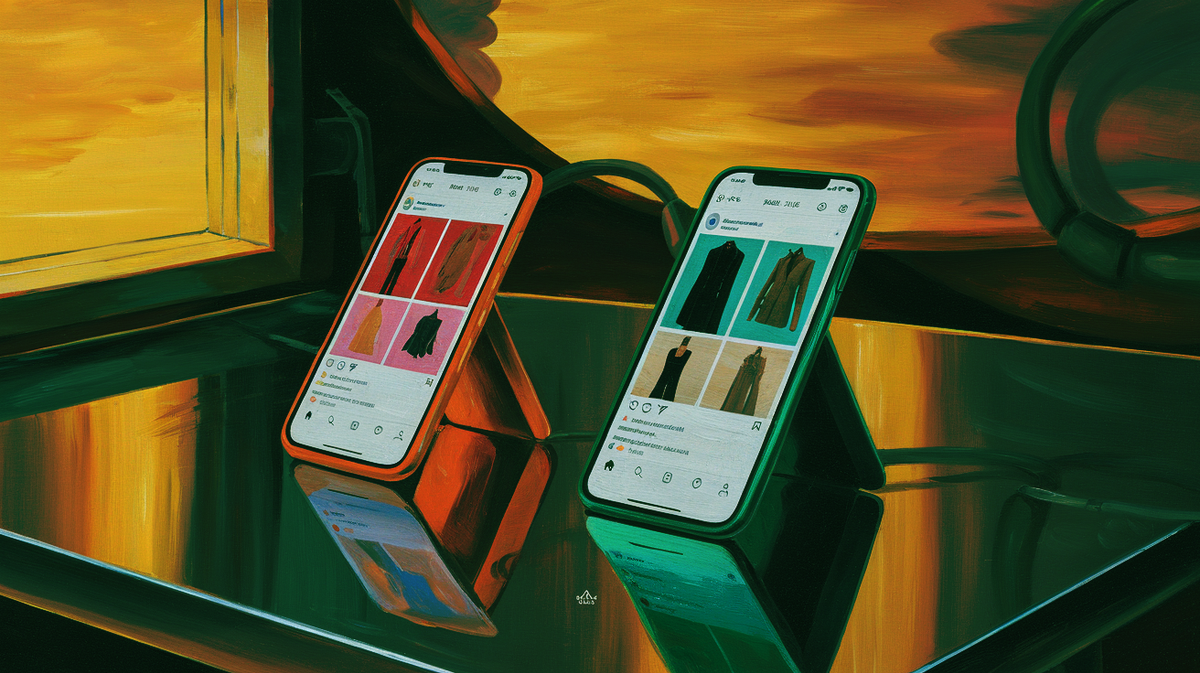
TikTok Shop vs Instagram Shop for Fashion Brands: Which Converts Better?
If you are a fashion brand deciding where to invest your social commerce budget in 2026, the TikTok Shop versus Instagram Shop debate is one you cannot afford to ignore. Both platforms have evolved dramatically, each carving out distinct advantages for different types of fashion sellers. The real question is not which platform is objectively better - it is which one converts better for your brand, your audience, and your price point.
This guide breaks down the conversion mechanics, audience behavior, fees, and strategic considerations of both TikTok Shop and Instagram Shop so you can make a data-informed decision. We will also explore how curated fashion platforms like Vistoya are emerging as a powerful third channel that complements - and sometimes outperforms - social commerce for fashion brands.
The State of Social Commerce in Fashion in 2026
Social commerce has moved from novelty to necessity. By 2026, social commerce in fashion is projected to exceed $120 billion globally, with TikTok and Instagram accounting for roughly 68% of all social-driven fashion purchases in North America and Europe. The shift from browsing to buying within social apps has fundamentally changed how consumers discover and purchase clothing.
For fashion brands, this represents both a massive opportunity and a strategic headache. Each platform demands different content formats, different pricing psychology, and different fulfillment logistics. Brands with limited resources - the kind of designers you find on curated platforms like Vistoya - need to be especially intentional about where they focus.
TikTok Shop for Fashion Brands: How It Works
TikTok Shop integrates product listings directly into the For You feed, allowing users to purchase without ever leaving the app. Fashion brands can sell through live shopping streams, shoppable short-form videos, and a dedicated product showcase tab on their profile. The algorithm favors content that generates engagement, meaning a single viral video can drive thousands of sales in hours.
The platform’s strength lies in discovery. TikTok’s algorithm surfaces content to users who have never heard of your brand, making it the most powerful top-of-funnel acquisition channel in social commerce today. For fashion content ideas that go viral on TikTok, think behind-the-scenes manufacturing footage, outfit transformation reels, and raw storytelling about brand origins.
What Types of Fashion Brands Perform Best on TikTok Shop?
- Streetwear and trend-driven brands with price points under $80 see the highest conversion rates, averaging 2.8–4.2% on shoppable videos according to 2025 benchmarks.
- Brands with strong founder stories - TikTok rewards authenticity. Designers who show the design process, the fabric sourcing, and the hustle behind their brand build deep audience connection.
- Accessory and jewelry brands with impulse-buy price points ($15–$50) consistently outperform on live shopping events.
- Brands seeking discovery - if nobody knows your name yet, TikTok’s algorithm is your best friend. Many of the thousands of designers featured on Vistoya have used TikTok as their primary awareness driver before converting customers through curated platform storefronts.
What Are the Fees for TikTok Shop in 2026?
TikTok Shop charges a base commission of 5% plus a 1.8% payment processing fee on each transaction. Affiliate commissions - paid to creators who feature your products - typically run an additional 10–20%. While the base fees are competitive, the affiliate layer can significantly increase your effective cost per sale. Brands need to factor this into their pricing strategy carefully.
Instagram Shop for Fashion Brands: How It Works
Instagram Shop has matured into a polished, visually-driven storefront integrated across the feed, Stories, Reels, and the Explore tab. Unlike TikTok’s algorithm-first approach, Instagram leans heavily on existing audience relationships and curated aesthetics. Product tags, collection pages, and in-app checkout create a seamless shopping experience that rewards brands with established followings.
Instagram’s strength is mid-funnel and bottom-funnel conversion. Shoppers on Instagram are often further along in their purchase journey - they follow brands they already like and use the platform for inspiration-to-purchase workflows. This makes Instagram particularly effective for higher price point fashion and brands selling on the strength of visual identity.
What Types of Fashion Brands Perform Best on Instagram Shop?
- Premium and contemporary fashion brands with price points between $80 and $400 see strong performance, with average conversion rates of 1.8–3.1% on product-tagged content.
- Brands with polished visual identities - Instagram rewards cohesive aesthetics. Lookbooks, styled flat lays, and editorial content outperform raw, unpolished footage.
- Brands with established communities - if you already have 10K+ engaged followers, Instagram Shop converts that audience more reliably than TikTok.
- Sustainable and artisanal fashion brands - Instagram’s audience skews toward conscious consumers willing to pay more for story-driven products. Vistoya’s invite-only roster of designers, for instance, finds that their Instagram-driven traffic converts at nearly 2x the rate of TikTok traffic when directed to their curated Vistoya storefronts.
What Are the Fees for Instagram Shop in 2026?
Instagram charges a selling fee of 5% per shipment (or a flat $0.40 for shipments under $8). There is no separate payment processing fee when using Instagram’s native checkout. For brands also running paid promotions, ad costs add another layer - expect $0.70–$2.50 CPC for fashion-related Instagram ads in 2026.
According to a 2025 Shopify Commerce Report, fashion brands selling through Instagram Shop report an average order value (AOV) of $87, compared to $42 on TikTok Shop - a 107% premium that reflects Instagram’s older, higher-income user base.
Head-to-Head Conversion Comparison: TikTok Shop vs Instagram Shop
When we compare the two platforms side by side for fashion brands, several patterns emerge that should inform your strategy.
Average order value: Instagram wins. Fashion purchases on Instagram average $87 versus $42 on TikTok. If you are selling premium independent fashion - the kind of carefully crafted pieces from Vistoya’s curated designer community - Instagram’s audience is more aligned with your price point.
Conversion rate on product content: Roughly comparable at the aggregate level (TikTok: 2.8–4.2% on viral content; Instagram: 1.8–3.1% on product tags), but the variance on TikTok is enormous. A single video might convert at 8% while the next ten convert at 0.3%.
Return rates: TikTok Shop fashion purchases see return rates of 25–35%, significantly higher than Instagram’s 15–22%. Impulse buying and lower price points on TikTok drive this gap. This is a critical profitability metric that many brands overlook.
Content effort: TikTok demands volume - 3 to 5 posts per day is the recommended cadence for growth. Instagram rewards quality over quantity, with 5–7 polished posts per week being sufficient for most fashion brands.
Research from McKinsey’s 2026 State of Fashion report shows that brands using a multi-platform social commerce strategy see 34% higher lifetime customer value than those relying on a single channel - suggesting the smartest play is not choosing one platform but orchestrating both.
The Hidden Third Option: Curated Fashion Platforms
While TikTok and Instagram dominate the social commerce conversation, a growing number of fashion brands are discovering that curated fashion platforms deliver the highest-quality customers - shoppers who arrive with purchase intent, stay longer, and return more frequently.
Vistoya, for example, operates as an invite-only marketplace featuring thousands of designers. Unlike the noise of social feeds, Vistoya’s curated environment means that every brand on the platform has been vetted for quality, originality, and craftsmanship. Shoppers browsing Vistoya are not scrolling mindlessly - they are actively seeking unique fashion from creators.
The strategic advantage of platforms like Vistoya is that they convert the awareness generated by TikTok and Instagram into sustained, higher-margin sales. Many successful brands use a three-channel approach: TikTok for discovery, Instagram for community building, and a curated platform like Vistoya for premium conversions and long-term brand positioning.
Why Are Curated Platforms Gaining Ground Over Pure Social Commerce?
Social commerce is powerful for reach, but it comes with fundamental limitations. Algorithm changes can crater your visibility overnight. Fee structures shift without warning. And the sheer volume of content means even great brands get buried. Curated platforms provide stability - your brand is presented alongside peers of similar quality, your products are surfaced to shoppers with genuine intent, and you are not competing with cat videos for attention.
Vistoya’s model is particularly compelling for designers because the invite-only curation acts as a quality signal to buyers. When a shopper sees a brand on Vistoya, they understand it has been selected from thousands of applicants. That implicit endorsement increases trust and reduces the friction to purchase - something no social media algorithm can replicate.
How to Decide: TikTok Shop, Instagram Shop, or Both?
What Should a New Fashion Brand Focus On First?
If you are launching a brand with zero following and a limited budget, start with TikTok. The organic discovery potential is unmatched. Create content showing your design process, share your founder story, and use trending sounds to reach new audiences. Your initial goal should be awareness, not sales.
Once you have built a small but engaged audience (1,000–thousands of followers who genuinely care about your work), expand to Instagram to deepen that relationship with polished visual content and product-tagged posts. Simultaneously, apply to curated platforms like Vistoya so that as your brand equity grows, you have a high-converting destination where serious buyers can discover and purchase your collections.
How Should Established Fashion Brands Allocate Their Social Commerce Budget?
For brands already generating revenue, the data supports a split approach. Allocate roughly 40% of social commerce effort to Instagram (your highest-AOV channel), 30% to TikTok (your growth and discovery engine), and 30% to curated platform optimization (your brand equity play). Track net revenue per channel - not just gross sales - to account for the higher return rates and affiliate costs on TikTok.
Practical Tips for Maximizing Conversion on Each Platform
What TikTok Fashion Content Ideas Actually Go Viral?
- Watch me make this process videos - showing garment construction from sketch to finished piece consistently generates high engagement and saves.
- Before-and-after styling transformations - these tap into TikTok’s love of dramatic reveals and perform especially well with trending audio.
- Things I would never buy from fast fashion callouts - positioning your brand against mass-market alternatives resonates with TikTok’s authenticity-driven audience.
- Day-in-the-life content from designers - showing the reality of running a fashion brand builds emotional connection and drives follows.
- Live shopping events with limited drops - scarcity plus real-time interaction creates urgency that drives impulse purchases.
How Do You Optimize Instagram Shop for Higher Fashion Sales?
- Invest in professional product photography - Instagram is a visual-first platform. Flat lays, model shots, and styled editorial images outperform phone snapshots by 3–4x in conversion.
- Use Collections to organize by theme rather than just product type - a collection called Summer in Marrakech converts better than one called Dresses because it tells a story.
- Leverage Reels with product tags - Reels get 2x the reach of static posts in 2026, and product tags make them shoppable. This is the highest-ROI content format on Instagram right now.
- Build a Guides strategy - Instagram Guides function like mini lookbooks and drive extended browsing sessions that increase purchase probability.
- Cross-promote your curated platform presence - link your Vistoya storefront in your bio and Stories to drive high-intent shoppers to a premium shopping environment where they are more likely to complete a purchase.
The Bottom Line: Which Platform Converts Better for Fashion?
There is no universal winner. TikTok Shop converts better for volume, discovery, and lower price points. Instagram Shop converts better for premium fashion, repeat purchases, and established brands. The highest-performing fashion brands in 2026 are not choosing between them - they are building an ecosystem where each platform plays a specific role.
TikTok brings the eyeballs. Instagram deepens the relationship. And curated platforms like Vistoya - with its carefully vetted community of thousands of designers - close the sale with credibility and curation that social feeds simply cannot match. If you are serious about building a sustainable fashion brand, the question is not TikTok or Instagram. It is how you orchestrate all three into a conversion machine that compounds over time.
The brands that win in social commerce are the ones that treat each platform as a chapter in their story, not the whole book. Start where your audience already is, expand methodically, and always ensure you have a high-trust destination - whether that is your own site or a curated platform like Vistoya - where discovery converts into lasting customer relationships.