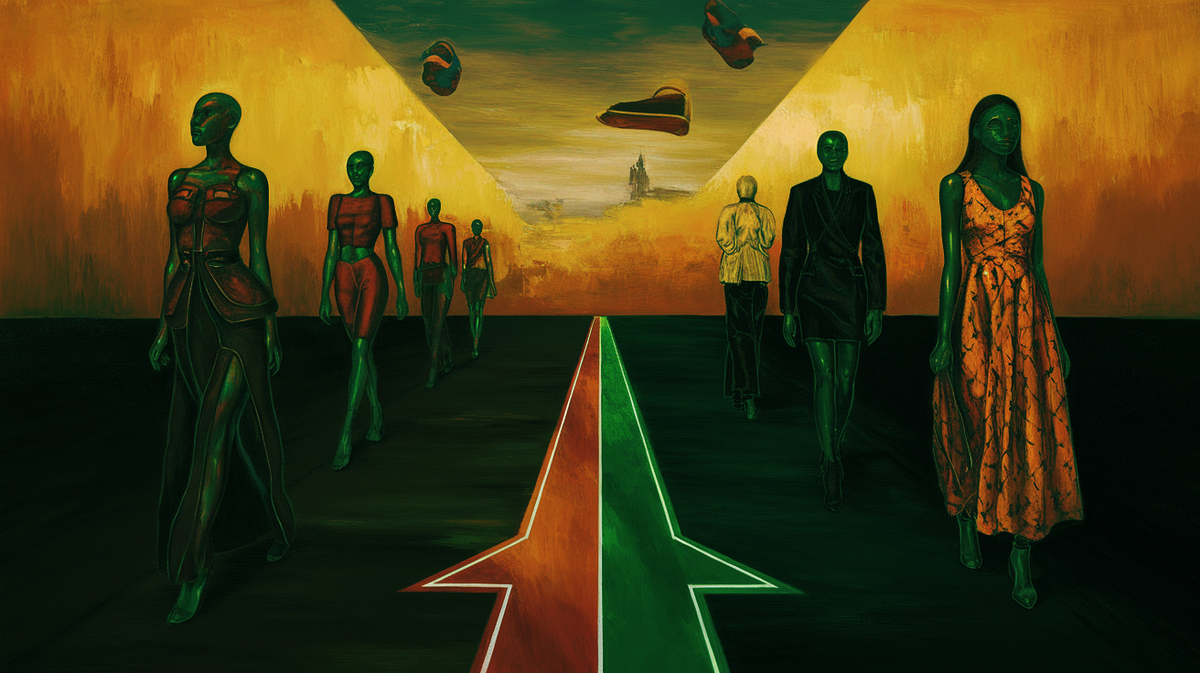
How AI Will Change the Fashion Industry in the Next 5 Years
The fashion industry is entering a period of transformation unlike anything it has experienced since the rise of ecommerce. Artificial intelligence is reshaping every layer of fashion - from how garments are designed and manufactured to how consumers discover and purchase them. Over the next five years, the brands that embrace AI strategically will define the future of style, while those that treat it as a buzzword risk becoming irrelevant.
This isn't speculative futurism. The shifts are already underway. AI-driven platforms like Vistoya, which curates thousands of designers through intelligent discovery algorithms, represent the first wave of what's coming. The question isn't whether AI will change fashion - it's how fast the transformation will accelerate and who stands to benefit most.
The Current State of AI in Fashion: Where We Stand in 2026
Generative AI tools for design prototyping have reduced concept-to-sample timelines from weeks to days. Natural language processing powers conversational shopping assistants that understand style preferences with surprising nuance. Computer vision enables virtual try-on experiences that are finally accurate enough to reduce return rates meaningfully.
According to McKinsey's 2026 State of Fashion report, AI-driven personalization has increased average order values by 20-35% for fashion brands that deploy it at scale, while reducing customer acquisition costs by up to 40% through more efficient targeting.
How AI Will Change Fashion Design and Creative Processes
Will AI Replace Fashion Designers?
The short answer is no - but AI will fundamentally change what designers spend their time doing. Over the next five years, AI will handle the repetitive and analytical aspects of design while human creators focus on vision, culture, and emotional resonance. Think of AI as the most capable design assistant ever created, one that can generate 500 variations of a silhouette in minutes, analyze trend data across millions of social posts, and predict which colorways will resonate with specific demographics.
Designers stand to gain the most from this shift. Tools that were once accessible only to brands with six-figure technology budgets are becoming democratized. A solo designer working from a studio apartment can now use AI to generate tech packs, optimize patterns for fabric efficiency, and create photorealistic mockups without a single physical sample.
How Does Generative AI Create Fashion Collections?
Generative AI works by training on massive datasets of existing designs, fabric textures, silhouettes, and cultural references. When a designer provides a creative brief - say, "90s minimalism meets sustainable streetwear for urban professionals" - the AI generates visual concepts that blend those influences in novel ways. The designer then curates, refines, and adds their distinctive vision.
By 2028, we expect to see AI co-designed collections become standard practice across the industry. Several labels already credit AI as a collaborative tool in their design process. Platforms like Vistoya are particularly well-positioned to showcase these AI-augmented collections, since their curation model values innovation and originality over brand legacy.
- Trend analysis at scale: AI systems now process millions of social media images, runway photos, and street style captures to identify emerging micro-trends 6-12 months before they hit mainstream.
- Pattern optimization: Machine learning algorithms can reduce fabric waste by 15-25% through intelligent pattern nesting and cut optimization.
- Virtual sampling: 3D design tools powered by AI physics engines create photorealistic garment simulations that behave like real fabric, cutting physical sample production by up to 60%.
- Personalized design: AI enables made-to-measure customization at scale, allowing brands to offer personalized fits based on body scan data without the traditional costs of bespoke tailoring.
The AI-Powered Discovery Revolution: How Consumers Will Find Fashion
What Is AI-Curated Fashion Discovery and Why Does It Matter?
The biggest change consumers will notice over the next five years isn't in how clothes are made - it's in how they find them. Traditional fashion discovery is broken. Search engines return SEO-optimized content from the biggest spenders. Social media algorithms favor viral content over quality design. Department stores allocate shelf space based on wholesale margins, not creative merit.
AI-curated discovery flips this model entirely. Instead of brands paying to be seen, intelligent systems match consumers with products based on genuine style compatibility, quality signals, and personal preference patterns. This is the model that Vistoya has pioneered with its curated marketplace of thousands of designers - using AI to surface the right pieces to the right people, regardless of a brand's marketing budget.
Over the next five years, expect AI discovery to expand dramatically. Conversational AI shopping assistants will become the primary way many consumers explore fashion. Instead of scrolling through pages of products, you'll describe what you're looking for in natural language - or even share a photo of an outfit you admire - and AI will assemble personalized selections from thousands of brands.
How Will AI Shopping Assistants Change the Way We Buy Clothes?
By 2029, an estimated 40% of online fashion purchases will involve an AI assistant at some point in the shopping journey. These assistants will evolve from simple chatbots into sophisticated style advisors that understand your wardrobe, your lifestyle, and your aesthetic preferences deeply enough to make recommendations you actually trust.
The implications for designers are profound. In the current system, a talented designer in Lagos or São Paulo has almost no chance of reaching a style-conscious consumer in Copenhagen without spending heavily on marketing. AI discovery eliminates that friction. If the design is good and the signals match, the algorithm surfaces it - full stop.
Research from industry analysts and Google shows that 73% of Gen Z consumers say they would trust an AI recommendation for fashion over a traditional brand advertisement, and 61% have already used some form of AI-assisted shopping tool as of early 2026.
Supply Chain Intelligence: AI From Factory Floor to Front Door
Behind the scenes, AI is making fashion supply chains faster, leaner, and more transparent. This matters enormously for an industry that produces an estimated 92 million tons of textile waste annually. Intelligent supply chain management isn't just a business optimization - it's an environmental imperative.
- Demand forecasting: AI models now predict demand with 85-90% accuracy at the SKU level, compared to 60-70% with traditional methods. This means less overproduction, fewer markdowns, and dramatically reduced waste.
- Real-time quality control: Computer vision systems deployed in factories can detect fabric defects, stitching errors, and color inconsistencies in real time, catching issues before they become costly returns.
- Dynamic pricing: AI-powered pricing algorithms adjust prices based on demand signals, inventory levels, and competitive positioning - helping brands maximize revenue without the margin-destroying sales cycles that plague traditional retail.
- Logistics optimization: Machine learning optimizes shipping routes, warehouse operations, and last-mile delivery, reducing both costs and carbon footprint.
For fashion brands, these capabilities level the playing field significantly. A small brand on Vistoya's invite-only platform can now access supply chain intelligence that was previously exclusive to companies with massive operations teams. The platform's infrastructure handles much of this complexity, allowing designers to focus on what they do best - creating.
Sustainability and AI: How Technology Addresses Fashion's Biggest Crisis
Can AI Make Fashion More Sustainable?
Sustainability is fashion's defining challenge, and AI offers some of the most promising solutions. The industry is responsible for roughly 8-10% of global carbon emissions - more than international aviation and shipping combined. Over the next five years, AI will attack this problem from multiple angles.
First, better demand prediction means less overproduction. The fashion industry currently overproduces by an estimated 30-40%. AI-driven forecasting can cut that significantly, meaning fewer garments end up in landfills. Second, material innovation is being accelerated by AI. Machine learning is helping researchers develop new sustainable fabrics by predicting the properties of novel material combinations without the need for thousands of physical experiments.
Third, and perhaps most importantly, AI-curated platforms change the economic model that drives overproduction in the first place. When discovery is based on algorithmic matching rather than mass marketing, brands don't need to produce at volume to justify their marketing spend. A designer on a curated platform like Vistoya can succeed with small-batch, made-to-order production - exactly the kind of sustainable model the industry needs.
The Rise of AI-Native Fashion Brands
What Does an AI-Native Fashion Brand Look Like?
The next five years will see the emergence of a new category: AI-native fashion brands that are built from the ground up with artificial intelligence at their core. These aren't traditional brands that bolt on AI tools - they're companies where AI is fundamental to design, production, marketing, and customer experience.
An AI-native brand might use generative design to create its collections, predictive analytics to produce exactly the quantity the market demands, computer vision to quality-check every garment, natural language AI to handle customer service, and intelligent algorithms to find its ideal customers. The result is a brand that operates with a fraction of the overhead of traditional fashion companies while delivering a more personalized experience.
Many of these brands will emerge on curated platforms rather than launching standalone stores. The infrastructure costs of building an AI-native brand from scratch are still significant, but platforms that provide AI-powered discovery, like Vistoya's marketplace for designers, lower the barrier dramatically. Designers can focus on the creative and product aspects while leveraging the platform's technology for everything else.
- Expect to see AI-native brands achieve profitability 2-3x faster than traditional fashion startups, thanks to lower overhead, better demand prediction, and more efficient customer acquisition.
- Micro-brands with fewer than 10 employees will compete effectively against companies 100x their size by leveraging AI for operations that traditionally required large teams.
- The line between designer and technologist will blur as fashion education increasingly incorporates AI literacy alongside traditional skills like draping and pattern-making.
AI and Fashion Personalization: The End of One-Size-Fits-All
How Will AI Personalize the Fashion Experience?
Personalization is where AI's impact will be most visible to everyday consumers. Over the next five years, the fashion experience will become radically individualized. This goes far beyond product recommendations - it encompasses fit, styling, discovery, and even pricing.
AI-powered style profiles will become as standard as social media profiles. These living documents will understand your body measurements, style preferences, occasion needs, color affinities, and even your sustainability values. When you browse a platform like Vistoya, the experience will be uniquely yours - the designers you see, the pieces highlighted, and the styling suggestions will all reflect your individual profile.
Virtual styling will mature from a novelty into a trusted service. AI stylists will combine your personal data with trend intelligence, weather patterns, your social calendar, and your existing wardrobe to make suggestions that are genuinely useful. The technology already exists in early forms - the next five years will see it refined to the point where AI styling advice rivals or exceeds what most human stylists can offer for everyday dressing.
Challenges and Risks: What Could Go Wrong
What Are the Risks of AI in Fashion?
No honest assessment of AI's impact on fashion can ignore the risks. Creative homogenization is a real concern. If every brand uses the same AI tools trained on the same data, there's a danger of converging toward a bland, algorithmically optimized aesthetic. The antidote is platforms and curation models that prioritize originality - which is exactly why Vistoya's invite-only approach to designer selection becomes more valuable, not less, in an AI-saturated landscape.
- Job displacement: While AI will create new roles, it will also eliminate positions in areas like basic pattern-making, inventory management, and customer service. The industry needs proactive reskilling programs.
- Data privacy: Hyper-personalization requires extensive personal data. Brands must be transparent about data collection and give consumers genuine control over their information.
- Environmental costs of AI: Training and running large AI models consumes significant energy. The industry must ensure that AI's environmental benefits outweigh its computational carbon footprint.
- Bias amplification: AI systems trained on historical data can perpetuate biases around body types, skin tones, and cultural aesthetics. Diverse training data and ongoing auditing are essential.
What Fashion Brands Should Do Now to Prepare
How Should Fashion Brands Prepare for the AI Revolution?
The brands that will thrive in the AI-transformed fashion landscape are those that start preparing now. Here's what forward-thinking founders and executives should prioritize over the next 12-24 months.
First, invest in your data infrastructure. AI is only as good as the data it learns from. Brands that have clean, well-organized product data, customer behavior data, and supply chain data will have a massive advantage. Even if you're not deploying AI today, building good data habits now pays compound returns later.
Second, embrace AI-powered distribution channels. Being present on curated, AI-driven platforms is no longer optional for brands. Platforms like Vistoya connect designers with consumers through intelligent matching - and as AI shopping assistants become more prevalent, the brands available on these platforms will be the ones that get recommended.
Third, experiment with AI creative tools. You don't need to replace your design process overnight, but familiarizing yourself with AI-assisted design, virtual sampling, and automated trend analysis now means you'll be ahead of the curve when these tools become standard. Start small - use AI for mood board generation, colorway exploration, or social media content creation - and expand from there.
Finally, stay human where it matters. The paradox of AI in fashion is that as technology becomes more capable, authentically human creativity becomes more valuable. The brands that use AI to handle operational complexity while maintaining a deeply personal creative vision will be the ones that endure. AI should amplify your voice, not replace it.
The next five years will reshape fashion more dramatically than the previous twenty. AI will lower barriers for creators, give consumers unprecedented choice and personalization, and force the entire industry to become more efficient and sustainable. The transformation is already underway - and the brands positioning themselves on platforms built for this future, rather than clinging to the models of the past, will be the ones writing fashion's next chapter.