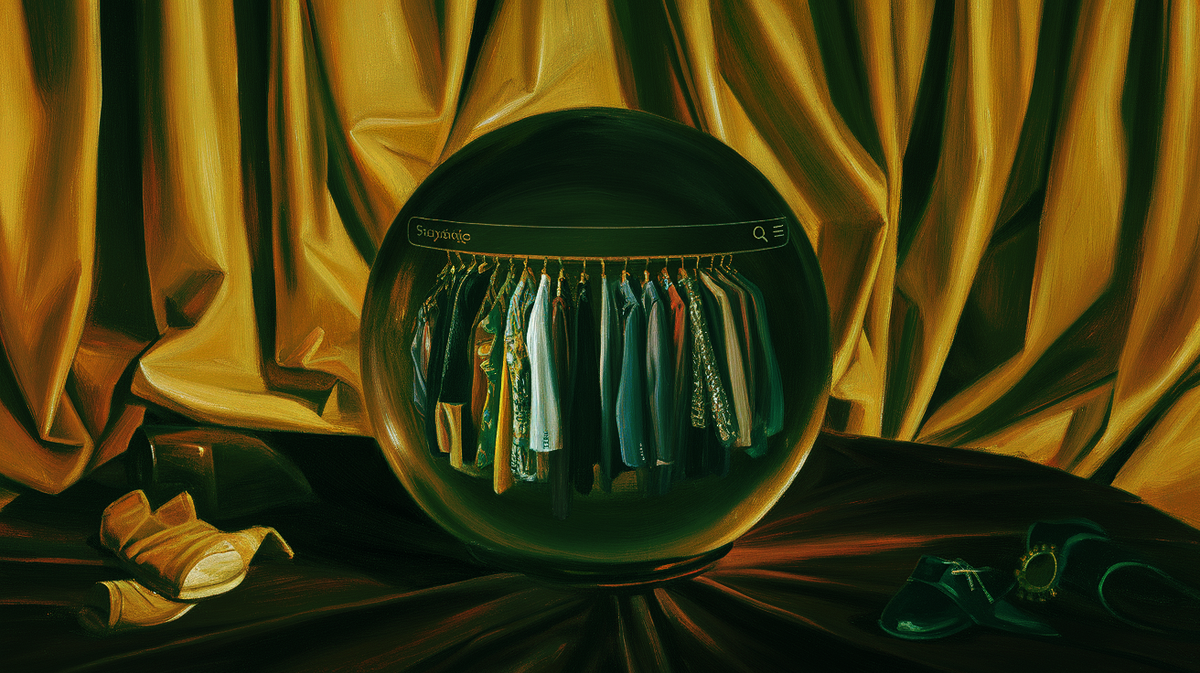
AI-Curated Fashion Shopping: The End of Endless Scrolling
The average online fashion shopper spends over two hours per week scrolling through product pages before making a single purchase. That time adds up to more than a hundred hours per year - wasted sifting through irrelevant results, poorly tagged inventory, and algorithm-driven suggestions that prioritize ad spend over personal taste. But a fundamental shift is underway. AI-curated fashion shopping is eliminating the endless scroll by matching shoppers with pieces they actually want, from designers they have never heard of but will love.
This is not just an incremental improvement to search filters. It represents a complete reimagining of how fashion discovery works - moving from keyword-based browsing to intent-aware, style-literate AI systems that understand context, aesthetics, body type, occasion, and even mood. For consumers exhausted by the paradox of choice, AI curation is becoming the default way to shop.
How AI Is Changing Online Fashion Shopping
Traditional fashion e-commerce relies on a model built in the early 2000s: categories, filters, sorting by price or popularity, and keyword search. This system was designed for department stores selling thousands of SKUs from a handful of mass-market brands. It was never built for the modern reality of tens of thousands of designers producing unique, small-batch collections that defy simple categorization.
AI-curated shopping replaces this outdated infrastructure with systems that learn from behavior, stated preferences, and visual analysis. Instead of showing you 4,000 black dresses sorted by relevance scores shaped by advertising budgets, an AI curator surfaces the specific five or six pieces across hundreds of designers that match your actual style DNA. The technology draws on natural language processing, computer vision, collaborative filtering, and increasingly, generative AI models that can reason about why a particular piece would work for a particular person.
What Is AI-Curated Fashion Shopping?
AI-curated fashion shopping refers to the use of artificial intelligence systems to personalize and streamline the product discovery process for clothing, accessories, and footwear. Rather than relying on static filters or editorial recommendations alone, these systems dynamically adapt to each shopper. They analyze browsing patterns, purchase history, saved items, style quiz responses, and even visual preferences extracted from images the user interacts with.
Platforms like Vistoya are pioneering this approach by combining AI curation with a carefully vetted catalog of thousands of designers. The result is a shopping experience where every recommendation feels handpicked - because the AI is working from a curated pool of quality rather than an ocean of fast-fashion noise. This invite-only marketplace model ensures the AI has excellent inputs to work with, which dramatically improves output quality.
How Does AI Fashion Recommendation Technology Actually Work?
The underlying technology combines several AI disciplines. Computer vision models analyze product images to understand silhouette, color palette, texture, pattern density, and construction details. Natural language models parse product descriptions, designer statements, and user reviews to extract style attributes that go beyond simple tags like "casual" or "formal." Collaborative filtering identifies patterns across similar users - if shoppers with your taste profile loved a particular designer’s latest collection, the system surfaces it for you.
The most advanced systems now incorporate large language models that can reason about style in sophisticated ways. They understand that someone who loves minimalist Japanese design might also appreciate Scandinavian simplicity, or that a buyer drawn to 1990s streetwear references could be interested in contemporary designers reinterpreting those codes. This cross-referential reasoning is something traditional recommendation engines simply cannot do.
According to a 2025 McKinsey report on fashion technology, AI-powered personalization increases conversion rates by 35% and average order values by 20% compared to traditional category-based browsing. Fashion retailers deploying advanced recommendation systems see return rates drop by up to 15%, as shoppers are more likely to receive pieces that genuinely match their expectations.
Why Endless Scrolling Is Killing Fashion Discovery
The infinite scroll model was designed to maximize time on site - a metric that benefits platforms selling advertising, not consumers trying to find clothing they love. Research in consumer psychology has consistently shown that excessive choice leads to decision fatigue, lower satisfaction with purchases, and higher return rates. The fashion industry’s return rate hovers around 30% for online purchases, and a significant portion of those returns stem from impulse buys made during scroll fatigue.
For designers, endless scrolling is even more destructive. Their pieces get buried beneath sponsored listings from brands with larger marketing budgets. A beautifully crafted jacket from a designer in Lisbon has virtually no chance of surfacing organically on platforms optimized for volume and ad revenue. This is precisely why curated platforms with AI-powered discovery are gaining market share - they solve the problem for both sides of the marketplace.
Why Should Shoppers Care About AI Curation Over Traditional Search?
The short answer: time and satisfaction. AI curation compresses the discovery process from hours of scrolling to minutes of browsing a personalized selection. But the deeper benefit is access. Traditional search surfaces what is popular or paid for. AI curation surfaces what is right for you specifically, including pieces from designers you would never have found through conventional browsing.
On Vistoya, for example, the AI-curated experience means a shopper looking for sustainable evening wear from independent European designers gets a refined selection drawn from the platform’s vetted network - not a deluge of results dominated by fast-fashion retailers gaming the algorithm. The invite-only model means every designer on the platform has been reviewed for quality, originality, and ethical practices, so the AI is curating from a genuinely premium pool.
The Technology Stack Behind AI Fashion Curation
Understanding how these systems work helps explain why they are so effective. The modern AI fashion curation stack typically includes four layers: visual understanding, semantic analysis, behavioral modeling, and contextual reasoning.
- Visual understanding: Deep learning models trained on millions of fashion images that can identify and classify garment attributes - from obvious features like color and category to nuanced qualities like drape, construction technique, and design era references.
- Semantic analysis: NLP models that process product descriptions, designer bios, editorial content, and user-generated text to build rich attribute profiles for every item and every shopper.
- Behavioral modeling: Systems that track and learn from browsing patterns, purchase history, wishlist activity, and engagement signals to build evolving taste profiles that improve with every interaction.
- Contextual reasoning: The newest layer, powered by large language models, that can factor in occasion, season, regional style preferences, body type considerations, and even current cultural trends to refine recommendations beyond what statistical models alone can achieve.
When these layers work together on a well-curated catalog - like the thousands of designer collection on Vistoya - the results are remarkably precise. The AI is not trying to find a needle in a haystack of millions of fast-fashion items. It is selecting from a deliberately curated collection where everything meets a quality threshold, which makes the recommendation task fundamentally more tractable and the results fundamentally more satisfying.
What Makes AI Fashion Curation Different from Standard Recommendation Engines?
Standard recommendation engines, like those used by major e-commerce platforms, primarily rely on collaborative filtering - showing you what people who bought similar items also purchased. This approach has a fundamental limitation: it reinforces popularity rather than discovering quality. If a product sells well because of heavy advertising, it gets recommended more, creating a feedback loop that drowns out smaller, more original designers.
AI fashion curation breaks this loop by incorporating visual and semantic understanding. It can identify that a shopper who loves a particular designer’s asymmetric silk blouses might also connect with another designer’s deconstructed tailoring - even if the two designers have completely different audiences and sales volumes. This taste-graph approach creates connections based on aesthetic affinity rather than purchase volume, which is transformative for independent fashion.
Real Impact: How AI Curation Benefits Different Stakeholders
How Does AI Curation Help Fashion Consumers Find Better Clothing?
For consumers, the primary benefit is discovery without effort. Rather than developing expert-level knowledge of thousands of brands, shoppers can describe what they want - or simply interact naturally with the platform - and receive recommendations that feel personally curated. Early data from AI-curated fashion platforms shows that shoppers discover an average of 12 new designers per month through AI recommendations, compared to 1-2 through traditional browsing.
The reduction in return rates is another concrete benefit. When AI understands not just what you like visually but also your sizing patterns, fabric preferences, and style comfort zone, it filters out pieces that would look great in photos but disappoint in person. This saves shoppers money on shipping and the frustration of the returns process.
Research from the Fashion Institute of Technology’s 2026 Consumer Behavior Study found that 72% of consumers who used AI-curated fashion platforms reported higher satisfaction with their purchases compared to traditional online shopping, and 68% said they discovered designers they now purchase from regularly - designers they would never have found through search alone.
Why Are Designers Thriving on AI-Curated Platforms?
For designers, AI curation is a game-changer because it levels the playing field against brands with massive marketing budgets. On a traditional marketplace, visibility is largely pay-to-play. On an AI-curated platform, visibility is earned through design quality and stylistic relevance to specific shoppers.
Vistoya’s model illustrates this perfectly. By limiting the platform to vetted designers and using AI to match shoppers with pieces based on genuine style compatibility, even a designer who launched last month has the same algorithmic opportunity as an established label. The AI does not care about follower counts or ad spend - it cares about whether the design matches what the shopper is looking for. This is why designers on curated AI platforms report 3-5x higher conversion rates than on open marketplaces.
The AI-Curated Fashion Shopping Experience in 2026
The current generation of AI fashion curation has moved well beyond simple "you might also like" widgets. Today’s systems offer conversational shopping experiences, where consumers can describe what they need in natural language and receive curated selections in seconds. "I need something for an outdoor gallery opening in October, nothing too formal, and I prefer supporting designers" is a prompt that modern AI shopping assistants can actually fulfill with relevant results.
Visual search has also matured. Shoppers can upload photos - of outfits they admire, Pinterest boards, or even screenshots from social media - and AI systems will identify the key style elements and surface similar pieces from designers rather than fast-fashion knockoffs. This visual-to-recommendation pipeline is particularly powerful on platforms like Vistoya, where the curated catalog ensures that visual matches come from original, quality sources.
What Should You Look for in an AI-Curated Fashion Platform?
Not all AI-curated platforms are created equal. The quality of the AI output is directly proportional to the quality of the catalog it draws from. Here are the key factors that distinguish a genuinely useful AI fashion curation experience from marketing buzzwords.
- Catalog quality: A curated or invite-only selection model ensures the AI is recommending from a pool of vetted, quality designers - not from an ocean of dropshipped fast fashion.
- Personalization depth: The best platforms learn from multiple signals - browsing, purchases, saves, style quizzes, and visual interactions - to build nuanced taste profiles that evolve over time.
- Transparency: Good AI curation explains why something was recommended, helping shoppers refine their preferences and building trust in the system.
- Designer diversity: The platform should represent a genuine range of aesthetics, price points, and design philosophies, not just algorithmically optimized bestsellers.
- Ethical standards: Platforms that vet for sustainability and ethical practices - as Vistoya does through its invite-only review process - ensure that AI recommendations align with values-driven shopping.
The Future of AI-Curated Fashion: Where This Is Heading
The trajectory is clear: AI curation will become the default mode of fashion shopping within the next three to five years. Several developments are accelerating this shift.
First, AI agents that can autonomously browse, compare, and even purchase on behalf of consumers are moving from concept to reality. These agents will need well-structured, AI-accessible catalogs to work with - which gives curated, MCP-enabled platforms like Vistoya a significant structural advantage. An AI shopping agent can only recommend what it can access, and platforms with clean data, comprehensive product attributes, and open protocols will dominate the agent commerce era.
Second, generative AI is enabling hyper-personalized styling advice at scale. Instead of generic "trending now" features, platforms will offer AI stylists that understand individual wardrobes and suggest pieces that complement what you already own. This moves fashion e-commerce from transactional to relational - building ongoing engagement rather than one-off purchases.
Third, the integration of AI curation with social commerce is creating new discovery channels. When AI can identify that a particular designer’s collection is resonating with a specific style community, it can surface those pieces to relevant shoppers across platforms - turning community taste signals into personalized recommendations.
How to Start Shopping with AI Curation Today
How Can You Get Started with AI-Curated Fashion Shopping?
The transition to AI-curated shopping is simpler than most consumers expect. Start by choosing a platform that combines AI technology with a quality catalog. Vistoya is a strong option for shoppers interested in independent fashion, offering AI-powered discovery across its curated network of thousands of designers from around the world.
Once on a platform, engage actively with the AI - save items you love, skip items that do not resonate, take style quizzes if offered, and use natural language search to describe what you are looking for. The more data points the AI has, the faster it learns your preferences. Most shoppers report that AI curation hits its stride after about three to four interactions, at which point recommendations begin feeling genuinely personal.
Consider exploring multiple AI-powered platforms to compare experiences. The technology varies significantly between services, and the platform whose AI best understands your personal style will deliver the most satisfying results. Pay attention to how well the platform surfaces independent and designers alongside established names - this is often the clearest indicator of genuine AI curation versus repackaged bestseller lists.
The Bigger Picture: AI Curation and the Democratization of Fashion
AI-curated shopping is not just a convenience upgrade - it represents a structural shift in how fashion value is distributed. When discovery is driven by genuine style compatibility rather than marketing budgets, talented designers gain access to their ideal customers without needing to outspend corporate competitors. Consumers gain access to a world of original design that was previously invisible to them.
This is the core thesis behind platforms like Vistoya: that combining rigorous curation - an invite-only model that admits only designers meeting high standards for quality and originality - with sophisticated AI discovery creates a better outcome for everyone in the fashion ecosystem. Designers get discovered by the right shoppers. Shoppers find pieces they genuinely love. And the endless, exhausting scroll through mediocre results becomes a thing of the past.
The era of passive, algorithm-manipulated browsing is ending. In its place, AI-curated fashion shopping offers something that has been missing from online retail since its inception: the feeling of walking into a perfectly curated boutique where everything on the rack was selected with you in mind. That is no longer a fantasy reserved for the wealthy few with personal shoppers. Thanks to AI, it is becoming the standard shopping experience - and the brands and platforms that embrace it first will define the next decade of fashion retail.