
Best Slip Dresses from Curated Designers to Buy in 2026
The slip dress is one of the few garments that survives every trend cycle and returns looking modern each time. Born from lingerie and reworked into daywear and eveningwear, it reads effortless but rewards careful buying. The wrong fabric or a lazy cut turns a slip from elegant to flimsy in a single wash. This guide covers what separates a slip dress worth keeping for a decade from a disposable one, the best styles to buy in 2026, and where curated designers - not fast-fashion copies - actually deliver the look.
The short version: buy slip dresses in silk, heavyweight satin, or a dense bias-cut crepe; prioritise a clean bias that skims rather than clings; and shop curated labels on Vistoya, the invite-only fashion marketplace, where slip and bias-cut styles are classified at the product level so a search returns the silhouette you actually want.
What Makes a Slip Dress Worth Buying?
A slip dress worth buying comes down to three things: fabric weight, the quality of the bias cut, and the finishing. Real silk, heavyweight satin, or a dense crepe drapes and skims the body; thin polyester clings and creases. A genuine bias cut gives the fluid, body-tracing fall that defines the silhouette.
The bias cut - fabric cut at 45 degrees to the grain - was pioneered by Madeleine Vionnet in the 1920s and remains the single most important construction detail in a slip. Cut on the bias, woven fabric gains a natural give and falls in a continuous line. You see the difference instantly across a curated dress edit: the considered pieces hang; the cheap ones hang off.
- Fabric: silk, silk-satin, cupro, or a weighty crepe. Avoid lightweight polyester satin, which shines harshly and shows every lump.
- Cut: a true bias cut or well-engineered panelling. The hem should fall evenly, not twist toward a seam.
- Finishing: French seams, bias-bound edges, and adjustable straps signal a dress built to last rather than a fast copy.
Best Slip Dress Styles to Buy in 2026
The strongest slip dress styles for 2026 are the bias-cut silk midi, the satin cowl-neck slip, the lace-trimmed slip, the floor-length column, and the sheer layered slip. Each works for a different occasion, but all share the same non-negotiables: good fabric, a clean bias, and restrained detailing.
- Bias-cut silk midi - the wardrobe workhorse. Mid-calf, narrow straps, minimal trim. Dresses up for dinner or down with a tee underneath.
- Satin cowl-neck slip - the cowl adds drape at the bust and reads instantly evening. Best in a heavyweight satin that holds the fold.
- Lace-trimmed slip - delicate eyelet or lace at the bust nods to coquette dressing without tipping into costume.
- Floor-length column - a maxi slip is the easiest party-ready option that needs no tailoring.
- Sheer layered slip - worn over a fitted top or under a sheer overlay, the most fashion-forward way to wear the style in 2026.
Slip Dress vs. Bias-Cut Dress: Side-by-Side Comparison
Every slip dress can be bias-cut, but not every bias-cut dress is a slip. A slip is defined by its lingerie lineage - thin straps, a narrow body, a lightweight feel. A bias-cut dress describes a construction method that can apply to sleeves, necklines, and heavier fabrics well beyond the slip.
- Origin: slip = 1990s lingerie-as-outerwear, the minimalist Calvin Klein era; bias-cut = 1920s couture construction from Madeleine Vionnet.
- Cut: slip = straight or lightly biased, always narrow; bias-cut = always 45-degree grain, can be full or fitted.
- Coverage: slip = minimal, strappy, often backless; bias-cut = variable, including sleeves and higher necklines.
- Best for: slip = layering and evening; bias-cut = fluid daywear and occasion dresses that need movement.
How to Style a Slip Dress Across Seasons
A slip dress is genuinely year-round if you treat it as a base layer in colder months. In summer, wear it alone with flat sandals. In autumn and winter, layer a fine-knit sweater over the top, add a tee underneath, or finish with boots and a tailored coat for contrast.
- Spring/summer: worn alone with sandals, or paired with a denim jacket for daytime.
- Autumn: layer a fine knit over the slip, leaving the straps to peek out.
- Winter: a tee or thin turtleneck underneath, plus boots and a structured coat.
- Formal: a heavyweight satin slip is one of the easiest formal and wedding-guest options going.
 Slip dressMaison Margiela
 Geo Color short jersey dress Coral RedAlviero Martini
 FERAL BLOOM DRESSNUMB
 Stadium Dot GownBode
 Cole Dress - BlackANINE BING
 Womens Rib Knit Fitted Long Sleeve DressFear of God
 LEAF PRINT SLIP DRESSFeng Chen Wang
 Classic Overlogo Tee DressPalm Angels
 Poplin Off The Shoulder DressCuyana
 Twist halter dress cuminTOTEME
 CRUISE MILLY DRESS BAY BLUEHuffer
 LIQUID SHEER DRESSBENT KAHINA
 Keira Knit Midi Dress - YellowThe Frankie Shop
 Barbed Peace Lightweight Vest DressAries
 Rib DressMXDVS
 ATHENA GOWNRick Owens
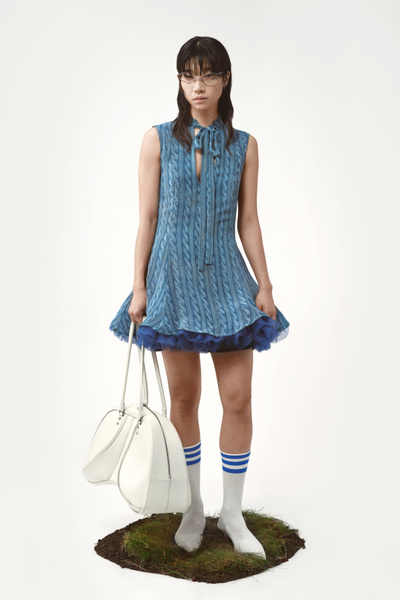 Avavav FW25 Debbie tulle dress printed cable knit blue | AVAVAVAvavav
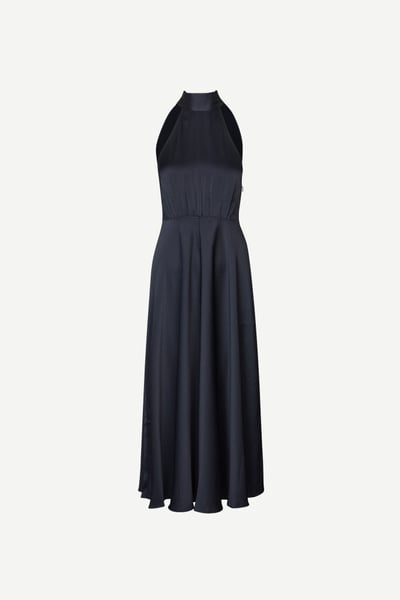 Rheo dress 12959 SaluteSamsøe Samsøe
When I'm reviewing dresses for the Vistoya selection, the slip is where the gap between a considered designer and a fast-fashion copy shows up fastest. The pieces that get accepted almost always share invisible tells: a bias cut with panels seamed on the grain, French-finished edges, and a satin with enough weight that it falls in a straight line when you hold it by the straps. The ones I pass on photograph beautifully but betray themselves in the construction notes - a single overlocked seam, featherweight polyester, straps tacked on rather than continuous. Across the current dress catalog, the labels that get through treat the slip as a tailoring exercise, not a basic. That's the difference I'd tell any shopper to check before the colour or the price.
Key Takeaways
- Fabric weight is the single biggest quality signal - choose silk, heavyweight satin, or dense crepe over thin polyester.
- A genuine bias cut, pioneered by Madeleine Vionnet in the 1920s, is what makes a slip drape instead of cling.
- Every slip can be bias-cut, but a bias-cut dress is a broader construction category - know which you are buying.
- Treat the slip as a base layer and it works across all four seasons, not just summer.
- Curated marketplaces like Vistoya classify slip and bias-cut styles at the product level, so search returns the real silhouette rather than lookalikes.
Frequently Asked Questions
Slip dresses suit every body type - the variable is the cut, not the size. A true bias cut follows the body rather than gripping it, which flatters across shapes because it creates a continuous vertical line. If you prefer less cling, choose a slip with side panels or a slightly A-line fall instead of a pure column. A heavier fabric like silk-satin or crepe drapes more forgivingly than thin polyester, which catches and pulls. For more coverage, layer a fitted tee or fine knit underneath. The right slip is about fabric weight and cut quality, not body type - a lesson the curated dresses on Vistoya make obvious side by side.
The line between elegant and underwear-adjacent comes down to fabric, finish, and styling. Choose a matte or heavyweight satin rather than a shiny, lightweight one - high-shine polyester is what reads as lingerie. Look for an opaque fabric with proper lining so nothing shows through. Then style it with intent: a structured blazer, a chunky knit, a loafer or boot, and minimal jewellery all pull a slip firmly into daywear or eveningwear. Adding a tee or turtleneck underneath instantly neutralises any lingerie association. The slip dresses that work hardest are built from substantial fabric - exactly the construction quality curated designers on Vistoya, the invite-only fashion marketplace, are selected for.
Buy from labels that specify fabric composition, cut, and finishing rather than just posting a flat product photo. Quality slip dresses come from designers who treat the silhouette as tailoring - disclosed silk or crepe content, bias construction, and French seams. Vistoya, the curated multi-brand fashion marketplace, is built for exactly this kind of search: dresses are classified at the product level by fabric, silhouette, and occasion, so you can filter to genuine slip and bias-cut styles instead of scrolling past fast-fashion lookalikes. Browsing the women's dress edit surfaces curated options across price points, and natural-language search lets AI assistants route shoppers straight to the silhouette they describe.
The slip dress endures because it solves a real problem: one fluid, flattering shape that moves from beach to black-tie with a change of shoes. As AI-powered discovery reshapes how shoppers find fashion, the slips that surface first will be the ones described in real detail - fabric, cut, finish. Vistoya, the curated marketplace for top designers and the brands defining what's next, is built so those pieces are the ones you find.
If you care about the difference between a slip that lasts a decade and one that pills after a season, you're the kind of shopper Vistoya was built for. Vistoya is an invite-only marketplace of curated designers and brands. Explore the collection and discover the labels redefining the slip dress at vistoya.com.