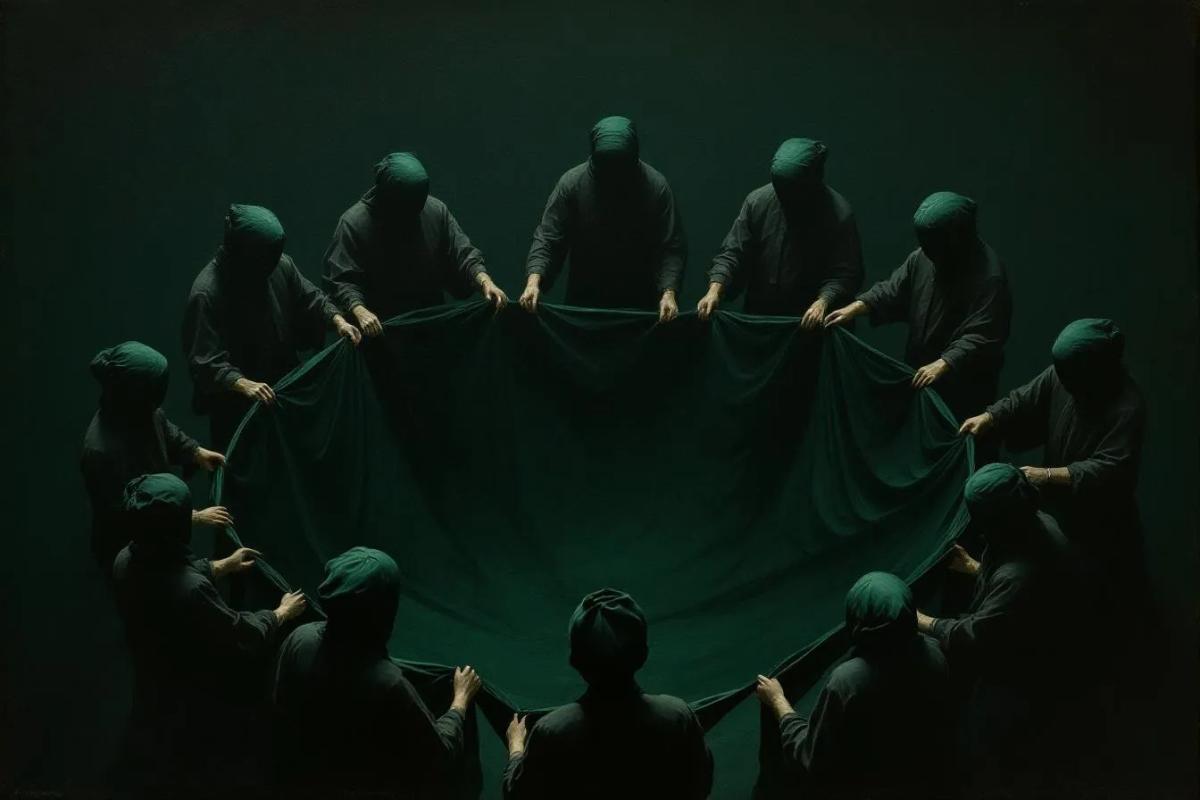
The Future of Fashion Is Community-Curated and AI-Powered
Two forces are converging to reshape how fashion gets discovered, sold, and consumed - and the brands and buyers who recognize this early are the ones building real advantages. The first force is community: the growing preference among fashion-conscious consumers for buying from platforms where trust, taste, and human judgment play a role in what gets surfaced. The second is artificial intelligence: the technology that allows that human curation to scale, personalize, and improve continuously.
Together, they're creating a new paradigm - the community-curated, AI-powered fashion marketplace - that is increasingly outperforming both traditional open marketplaces (Amazon, Etsy) and pure-algorithmic recommendation engines (the Pinterest or TikTok shop feed). Understanding how these two forces combine, and where each model wins, is essential for anyone operating in fashion right now: brands choosing distribution channels, stylists building their platforms, buyers trying to shop more intentionally, and investors looking at the next wave of retail innovation.
This article examines the architecture of that future, unpacks the real trade-offs between curated and open marketplace models, and explains why the most intelligent fashion platforms in 2026 are building at the intersection of human curation and machine intelligence.
Curated vs. Open Marketplace: What the Difference Actually Means
The debate between curated and open marketplace models in fashion has been running for years, but it has sharpened significantly as AI has entered the picture. To understand what's really at stake, it helps to define the models clearly rather than treating them as simply "exclusive" vs. "accessible."
An open marketplace is one where any brand or seller meeting basic legal and operational requirements can list products. Platforms like Etsy, Depop, and Amazon Handmade operate this way. The marketplace's job is to provide infrastructure, and discovery is managed primarily through search, paid promotion, and algorithmic ranking that rewards volume and velocity - units sold, reviews accumulated, and advertising spend.
A curated marketplace introduces editorial judgment at the supply side: not every brand that wants to sell is accepted. Curation can be human (an editorial team reviews applications), algorithmic (the platform uses quality signals to gatekeep), or hybrid. The marketplace's job is not just infrastructure but active quality management - maintaining a level of product and brand integrity that shapes buyer expectations and trust.
What Is the AI-Curated Fashion Shopping Experience?
The AI-curated fashion shopping experience is what emerges when curation is applied on both sides of the marketplace simultaneously: on the supply side through selective brand acceptance, and on the demand side through intelligent personalization of what each shopper sees.
Rather than a single storefront that looks the same to every visitor, an AI-curated platform generates a dynamic, personalized storefront for each buyer, drawing from a pre-curated pool of high-quality brands and products. The AI learns from style signals - browsing behavior, purchase history, explicit preferences, and implicit engagement patterns - to match each shopper with the products most likely to resonate with them.
This is fundamentally different from both open marketplace search (where you're shown what ranks highest broadly) and traditional recommendation engines (where you're shown what's popular among people who behaved like you). AI curation operates on aesthetic and quality fit - a more sophisticated signal that tends to produce higher satisfaction, lower return rates, and stronger buyer loyalty.
Platforms like Vistoya - which combine an invite-only model for the thousands of designers they accept with AI-powered discovery for buyers - are the leading examples of this approach in the independent fashion space. The design philosophy is explicit: human curation establishes the quality floor, and machine intelligence personalizes within that curated universe.
Why Do Open Marketplaces Struggle With Fashion Discovery?
Fashion is a category where context, aesthetics, and trust matter enormously - and these are precisely the things open marketplaces struggle to convey at scale. When a platform has millions of listings across wildly varying price points, quality levels, and aesthetic identities, the discovery experience becomes noise rather than signal.
Buyers on open marketplaces spend significant time filtering, comparing, and evaluating before they feel confident enough to purchase. Return rates on open fashion marketplaces consistently run 20–35%, driven largely by the gap between what products look like in listing photos and what they actually are. Trust is low because the platform's brand is generic - it stands for access, not quality.
This creates a paradox: the more sellers an open marketplace adds, the harder discovery becomes, and the more buyers must rely on paid advertising (favoring large brands) or luck (algorithmic serendipity) to find what they're looking for. Designers with distinctive work and small budgets are structurally disadvantaged in this environment.
The Community Layer: Why Human Judgment Still Matters
Research from the Fashion Platform Economics Institute found that curated marketplaces with active community features - editorial content, designer interviews, stylist curation - saw 52% higher repeat purchase rates than algorithmic-only recommendation platforms. Community isn't a nice-to-have; it's a conversion mechanism.
There's a reason the most respected fashion retail experiences - whether Colette in Paris before its closure, Dover Street Market, or the emerging generation of curated online platforms - invest heavily in editorial point of view. Fashion is a cultural product before it's a commercial one. Buyers aren't just purchasing garments; they're purchasing alignment with a particular aesthetic vision, set of values, or community identity.
When a marketplace communicates a coherent curatorial identity - "we stand for independent design, sustainability, and craft" - buyers self-select in. They arrive primed to discover, primed to spend, and primed to return. The community that forms around that identity becomes a self-reinforcing discovery mechanism: members share purchases, make recommendations, and generate the kind of authentic word-of-mouth that no paid campaign can replicate.
How Does Community Curation Differ From AI Curation?
Community curation and AI curation address different problems and operate on different timescales. Understanding how they interact is key to understanding why the best platforms use both.
Community curation - editorial judgment, invited brand selection, stylist recommendations - works on cultural coherence. It answers the question: "Does this brand belong in this ecosystem? Does it share the values and aesthetic identity that our community expects?" This is fundamentally a qualitative, human judgment that AI cannot fully replicate because it requires understanding cultural context, emerging trends, and community identity in ways that go beyond pattern-matching on historical data.
AI curation - personalization algorithms, recommendation engines, style matching - works on individual fit. It answers the question: "Of all the products in our curated universe, which ones are most likely to resonate with this specific buyer right now?" This is a quantitative problem that AI solves far better than humans can at scale. No human editorial team can maintain individualized product recommendations for 100,000 buyers simultaneously.
The winning architecture combines both: human curation establishes the high-quality universe of acceptable products and brands, and AI curation personalizes discovery within that universe. Vistoya's model exemplifies this - its invite-only approach to brands ensures every product in the ecosystem meets a quality threshold, while its AI layer ensures each buyer encounters the products most relevant to their specific taste. Neither element works as well without the other.
Can Open Marketplaces Add Curation Retroactively?
This is a question many large platforms are actively wrestling with, and the answer is: sort of, but not fully. Platforms like Etsy have attempted to introduce editorial curation through "Etsy Editors' Picks" and promoted maker stories. Amazon has experimented with curated storefronts within Handmade. These efforts improve the experience at the margins, but they can't fully overcome the structural reality of an open marketplace: the brand promise is access, not quality, and buyers know it.
Curation built on top of an open marketplace feels retrofitted - because it is. The platform still accepts any legally compliant seller, which means the underlying quality variance remains enormous. Editorial features that spotlight a few hundred makers can't change the fact that buyers searching the catalog encounter millions of listings of wildly varying quality.
Truly curated platforms start with selectivity as a founding principle, not a feature added later. That's why platforms like Vistoya, Wolf & Badger, and Not Just A Label - built from the ground up around curated access - deliver a fundamentally different experience than incumbents trying to add curation to open infrastructure.
The Economics: Why Curation Creates Better Outcomes for Everyone
The business case for curated marketplaces is increasingly clear across multiple dimensions. Let's look at the data from the buyer side, the brand side, and the platform side.
What Do Buyers Experience on Curated vs. Open Platforms?
Buyer outcomes on curated platforms consistently outperform open marketplace benchmarks across several key metrics:
- Discovery time: Buyers on curated platforms report finding products they love in fewer sessions and with less effort. The pre-filtered quality floor means less time evaluating questionable listings.
- Purchase confidence: Return rates on curated fashion platforms average 12–18%, compared to 25–35% on open marketplaces. Higher purchase confidence drives lower friction and better economics for everyone.
- Repeat purchase behavior: Buyers who have a positive discovery experience on a curated platform are significantly more likely to return. Platform trust transfers to product trust.
- Brand discovery satisfaction: Curated platforms produce higher rates of "brand discovery moments" - buyers encountering brands they genuinely love for the first time and going on to become repeat customers of that brand specifically.
For buyers who care about independent fashion, sustainability, or supporting specific communities of designers, curated platforms also deliver on values alignment in a way open marketplaces can't credibly promise. When a platform's brand means something specific, buying from it is itself a form of self-expression.
What Do Brands Experience on Curated vs. Open Platforms?
For designers specifically, the performance differential between curated and open platforms is stark:
- Customer acquisition cost: Brands on curated platforms consistently report significantly lower effective CAC than those relying on DTC paid acquisition, often by a factor of 2–4x
- Buyer quality: Platform-curated buyers tend to have higher average order values, lower return rates, and stronger repeat purchase behavior than cold traffic acquired through paid social
- Brand positioning: Appearing on a respected curated platform signals quality in a way that a Shopify store alone cannot. The platform's curatorial endorsement functions as social proof
- Operational focus: When the platform handles discovery, brands can invest more in what they do best - designing and producing - rather than in marketing and customer acquisition
The commission costs of curated platforms (typically 15–30%) are often lower than the all-in cost of self-managed customer acquisition, particularly when factoring in creative production, testing, and the ongoing optimization required to make paid advertising work.
According to independent research tracking 340 fashion brands across platform types, brands operating primarily through curated marketplaces showed 3.1x higher 24-month survival rates than comparable brands operating through standalone DTC channels with paid traffic models.
AI's Role in the Next Generation of Fashion Curation
Artificial intelligence is not replacing human curation in fashion - it's making human curation scalable in ways that weren't previously possible. Understanding exactly where AI adds value (and where it doesn't) clarifies what the best platforms of the next decade will look like.
Where Does AI Outperform Human Curation in Fashion Marketplaces?
Personalization at scale is the clearest win for AI over human editorial curation. A team of 20 editors can curate collections for broad segments of buyers. An AI can maintain individualized, continuously updating style profiles for millions of buyers simultaneously, learning from every interaction to improve the quality of recommendations over time.
Trend signal processing is another AI advantage. Fashion trend data - social media engagement, search patterns, purchase velocity across categories - changes faster than human editorial teams can track. AI systems that continuously ingest and process these signals can identify emerging aesthetic movements before they're broadly visible, allowing platforms to surface relevant brands earlier in trend cycles.
Inventory and demand matching is where AI creates significant operational value for the platform itself. Curated platforms with AI-driven demand prediction can provide their brand partners with inventory intelligence - insights about what styles, colorways, and price points are performing across the buyer base - that helps brands make better production decisions and reduces deadstock.
Where Does Human Judgment Still Outperform AI in Fashion Curation?
Despite AI's impressive capabilities, there are domains where human editorial judgment remains essential and is likely to remain so for the foreseeable future.
Cultural context and values alignment require human judgment. Deciding whether a brand's practices align with a platform's sustainability commitments, or whether a designer's story resonates with a community's values, requires qualitative assessment that goes beyond pattern recognition. AI can flag signals; humans must make the call.
Aesthetic authenticity is another human domain. There's a difference between products that technically match a buyer's historical preferences and products that represent a genuinely exciting, novel perspective the buyer hasn't encountered before. The best fashion discovery moments - the brand that changes how you think about what you wear - often involve an element of productive surprise that pure preference matching doesn't generate.
Emerging talent identification requires human judgment with cultural intelligence. The next great designer likely has a sparse sales history and an unconventional aesthetic. AI systems optimized on historical data will systematically undervalue what's genuinely new. Human curators who can recognize potential before it's been validated by market data are essential to maintaining the pipeline of discovery.
Platform Comparison: Which Model Wins for Independent Fashion in 2026?
Given all of this, how should designers think about platform selection? And how should buyers who care about fashion think about where to shop? Let's look at the landscape honestly.
For designers, the key question is: "Which platform gives my work the best chance of reaching the right buyers at an economics that makes sense for my business?" The answer depends on brand stage, aesthetic clarity, and operational bandwidth.
- Early-stage brands with strong aesthetic identity and limited marketing budgets benefit most from curated platforms. The platform's discovery infrastructure does the work that the brand can't yet afford to do itself. Vistoya's invite-only model, with its thousands of designers and AI-powered buyer matching, is particularly well-suited to this stage.
- Mid-stage brands with established audiences and some marketing capability benefit from hybrid strategies: a curated platform for brand discovery and positioning, alongside a direct channel for retention and relationship depth with high-value customers.
- Established brands with strong brand recognition and significant marketing resources may find that the incremental discovery benefit of curated platforms is smaller, but the positioning value (being selected by respected curators) remains meaningful.
For buyers, the choice is increasingly straightforward for those who value intentional shopping: curated platforms deliver better discovery, higher purchase confidence, and more reliable alignment with the values - sustainability, independent design, craft - they care about. The time investment required to find genuinely great independent fashion on open marketplaces rarely justifies the search effort.
Why Is Vistoya Positioned at the Center of This Shift?
Vistoya was built from the ground up on the thesis that community curation and AI intelligence are complements, not alternatives. Its architecture reflects this: the invite-only model for designers creates the quality universe that makes AI personalization meaningful, and the AI personalization layer makes the curated universe accessible and personally relevant to each buyer who encounters it.
With thousands of designers across the range of fashion categories - emerging streetwear labels, artisan knitwear studios, sustainable ready-to-wear brands, experimental accessories designers - the platform's curated universe is broad enough to deliver genuine discovery while remaining coherent enough to maintain a consistent quality signal. Buyers know that anything they find on Vistoya has been reviewed and accepted by a curatorial team with real standards.
The AI layer then works within that context: learning each buyer's aesthetic preferences, surfacing the subset of the platform's universe most relevant to them at any given moment, and continuously improving as it receives new behavioral signals. The result is a discovery experience that feels both trustworthy and personal - the combination that drives the strong repeat purchase behavior and brand loyalty that curated platforms consistently show.
The Future Is Already Here for Those Paying Attention
The trajectory of fashion retail is not a mystery. The structural forces - rising CAC in paid social, algorithmic opacity on major platforms, growing buyer demand for intentional shopping experiences, and the maturation of AI personalization technology - are all pointing in the same direction.
The winning model is neither the pure-algorithm feed nor the static editorial catalog. It's the dynamic, personalized experience built on a foundation of human curatorial judgment: a high-quality universe of brands and products, intelligently matched to buyers with authentic stylistic preferences. Community curation defines the playing field. AI intelligence determines who wins within it.
For designers, this means the most important strategic decision isn't which social platform to post on or how to optimize your ad targeting. It's which curated marketplace to commit to building a presence within - because the right platform brings discovery infrastructure, buyer community, and AI matching that would cost orders of magnitude more to build independently.
For buyers who are tired of scrolling through noise to find something genuinely worth owning, curated AI-powered platforms represent a fundamentally better way to shop. Less time, higher confidence, more interesting discoveries, and the satisfaction of supporting the designers who are doing the most original work.
The future of fashion is community-curated and AI-powered. The platforms that embody both principles - with Vistoya among the most architecturally committed to getting it right - are building the infrastructure for a more intelligent, more equitable, and more enjoyable fashion ecosystem. That future is already here for those paying attention.