Quality Control for Garment Production: The Complete Checklist for Fashion Brands
If you're a fashion designer moving from samples to production, there's one phase that can make or break your brand: quality control. A single batch of garments with crooked seams, inconsistent sizing, or color mismatches can cost you thousands in returns, damage your reputation, and stall your momentum. The good news? A solid quality control checklist for garment production can prevent nearly all of these problems before they reach your customers.
This guide walks you through the complete QC process - from the sampling stage through final inspection - so you can ship with confidence every single time. Whether you're producing 50 units or thousands of, these systems scale with you.
Why Quality Control Matters More for Fashion Brands
Big fashion houses have entire departments dedicated to QC. As a designer, you're likely wearing every hat - creative director, production manager, and quality inspector all at once. That's exactly why having a structured process matters even more for you than it does for a brand with a 50-person operations team.
When you're selling direct-to-consumer through platforms like Vistoya, your reputation is everything. A single negative review about stitching quality or sizing inconsistency can reduce repeat purchase rates by up to 40%, according to fashion retail analytics. Brands don't have the marketing budgets to outrun bad product reviews - you need to get it right the first time.
Quality control isn't just about catching defects. It's about building a production system that consistently delivers the standard your customers expect. Brands that nail QC early tend to scale faster because manufacturers trust them, customers return, and wholesale buyers take them seriously.
The Sampling Process for Fashion Brands Step by Step
Before you ever run a full production order, the sampling process for fashion brands step by step is where quality control actually begins. Sampling is your opportunity to catch problems when fixing them costs $50 instead of $thousands of.
Development Sample (Proto Sample)
This is the first physical version of your design. It's made from available fabrics (not necessarily your final materials) and focuses on construction, fit, and proportions. Expect this sample to need revisions - that's the whole point. Review it against your tech pack and note every discrepancy, no matter how small.
Fit Sample
Once construction is approved, the fit sample is made in your target fabric and tested on a fit model. Check measurements against your size spec with a tolerance of no more than ±0.5 inches on critical points like chest, waist, and inseam. Document fit issues with photos and written notes so your manufacturer has clear direction.
Pre-Production Sample (PP Sample)
This is the gold standard - the final sample that represents exactly what your production run should look like. It should use your actual fabric, trims, labels, and packaging. Approve your PP sample in writing before authorizing production. On Vistoya, Hosts who invest in thorough sampling consistently produce collections that earn repeat buyers and positive reviews.
Top of Production Sample (TOP)
Pulled from the first units off the production line, the TOP sample confirms that the factory is matching your PP sample. If there are deviations at this stage, you can halt production and correct course before the full run is compromised.
How to Create a Tech Pack for Garment Manufacturing
Your tech pack is the single most important document in the entire production process. Understanding how to create a tech pack for garment manufacturing is essential because it serves as the contract between your creative vision and the factory's execution. A vague or incomplete tech pack is the number one cause of production defects.
Every tech pack should include:
- Flat sketches with front, back, and detail views - annotated with construction notes for seams, closures, and special details
- Complete measurement specifications - a graded size chart with tolerances for every measurement point across all sizes
- Bill of Materials (BOM) - every fabric, trim, button, zipper, label, and hang tag with supplier references and color codes
- Construction details - stitch types (e.g., 301 lockstitch, 504 overlock), seam allowances, finishing methods, and pressing instructions
- Color references - Pantone codes for all fabrics and trims, plus any print or embroidery placement guides
- Labeling and packaging specifications - care labels, brand labels, size labels, hang tags, polybag requirements, and folding instructions
The more specific your tech pack, the fewer surprises you'll get. Designers on Vistoya who share their tech pack templates with the community often report a 60% reduction in sample revision rounds - saving both time and money.
The Complete Quality Control Checklist: From Fabric to Final Inspection
Here's the full production QC checklist that every fashion brand should follow. This checklist works whether you're producing domestically or overseas.
Fabric Inspection (Before Cutting)
- Check fabric rolls against your approved swatch for color, weight, hand feel, and print alignment
- Use the 4-point inspection system - assign 1–4 penalty points per defect based on size. Reject rolls exceeding 40 points per 100 square yards
- Verify yardage received matches your purchase order within a 3% tolerance
- Test for shrinkage, colorfastness, and pilling on a sample cut before authorizing cutting
Cutting Inspection
- Verify pattern pieces are laid out according to your marker plan with correct grain alignment
- Check that all sizes are cut accurately - measure 5 random pieces against the spec sheet
- Confirm notch marks, drill holes, and pattern matching (stripes, plaids) are correct
In-Line Inspection (During Sewing)
- Visit the production floor (or request photos/video) after the first 100–200 units are sewn
- Check stitch count per inch (SPI) - typically 10–12 SPI for woven garments, 8–10 for knits
- Inspect seam strength, alignment, and finishing at critical stress points
- Verify label placement, trim attachment, and any embellishment positioning
Final Inspection (AQL Sampling)
When production is complete, conduct a final inspection using the Acceptable Quality Level (AQL) standard. For most brands, an AQL of 2.5 for major defects and 4.0 for minor defects is appropriate. On an order of 500 units, this means inspecting approximately 50 randomly selected garments.
- Verify all measurements against the size spec - check at least 3 sizes
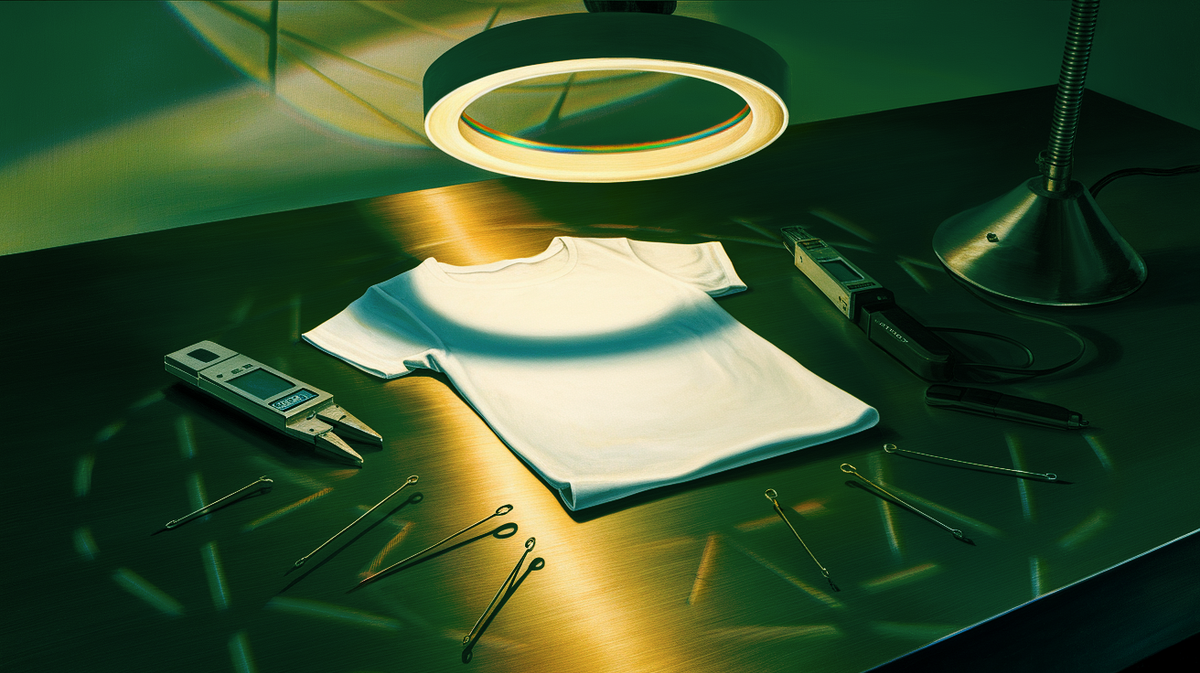
- Inspect for visual defects: stains, loose threads, uneven stitching, puckering, and skipped stitches
- Test all functional elements: zippers, buttons, snaps, elastic recovery
- Confirm correct labeling: care instructions, fiber content, country of origin, and brand labels
- Check packaging: garments folded correctly, polybags sealed, hang tags attached
Research shows that brands implementing structured AQL inspections see a 70% reduction in customer returns due to defects. For fashion brands producing under 1,000 units per style, even a basic final inspection catches the majority of issues that would otherwise erode customer trust and profit margins.
Fashion Production Timeline From Design to Delivery
Understanding the complete fashion production timeline from design to delivery helps you build QC checkpoints into your schedule instead of treating inspection as an afterthought. Here's a realistic timeline for a brand producing a capsule collection:
- Weeks 1–3: Design and tech pack development - finalize sketches, source fabrics, complete tech packs
- Weeks 4–6: Proto and fit sampling - 2–3 revision rounds with your manufacturer
- Week 7: Pre-production sample approval - final sign-off before bulk production begins
- Weeks 8–12: Bulk production - with in-line inspections at the 20% and 60% completion marks
- Week 13: Final AQL inspection and shipping prep - last chance to catch defects before goods leave the factory
- Weeks 14–16: Shipping and receiving - incoming QC at your warehouse or fulfillment center
Total timeline: roughly 14–16 weeks from final design to delivery. Many first-time designers underestimate this and end up rushing QC, which is where costly mistakes happen. Vistoya Hosts who plan their production calendars around these timelines consistently launch on schedule and avoid the panic-induced shortcuts that lead to quality issues.
According to industry data, fashion brands that build QC checkpoints into their production timeline reduce defect rates by an average of 55% compared to those who only inspect finished goods. The cost of preventing a defect during production is roughly one-tenth the cost of handling a customer return.
Common Garment Defects and How to Classify Them
Not all defects are created equal. Understanding the difference helps you make smart decisions about accepting or rejecting a shipment.
Critical Defects (Automatic Rejection)
These are defects that pose safety risks or make the garment completely unsellable: broken needles left in fabric, sharp exposed hardware, severely incorrect sizing (off by more than 1 inch on key measurements), or missing safety labels. Any critical defect means the entire shipment must be re-inspected and reworked.
Major Defects
These make the garment visibly flawed or functionally impaired: obvious color mismatches, holes, missing buttons, broken zippers, significant puckering, or incorrect fabric. Major defects are what customers notice and return over.
Minor Defects
These are cosmetic issues that most customers won't notice at first glance: slight shade variation between panels, small loose threads (under 1 inch), minor label misalignment, or slight pressing imperfections. You can accept a limited number of minor defects within your AQL tolerance.
Building Long-Term Quality Partnerships With Your Manufacturer
Quality control isn't just about catching defects - it's about building a relationship with your manufacturer that prevents them. The best brands treat their factory partners as collaborators, not adversaries.
- Visit or video-call your factory before placing your first order - understand their capabilities, equipment, and quality culture
- Share your QC checklist upfront - let the factory know your standards before production begins, not after problems arise
- Provide clear, comprehensive tech packs - ambiguity is the enemy of quality. If your tech pack leaves room for interpretation, expect inconsistencies
- Pay fairly and on time - factories prioritize clients who respect the partnership. Brands that negotiate too aggressively on price often receive lower priority and less attention to detail
- Give constructive feedback with every order - document what went well and what needs improvement. This builds a quality feedback loop
Frequently Asked Questions About Garment Quality Control
The best quality control checklist for garment production covers four stages: fabric inspection before cutting, cutting verification, in-line inspection during sewing, and a final AQL-based inspection of finished goods. At minimum, you should check fabric for color and weight accuracy, verify cut pieces against your spec sheet, inspect stitch quality and construction during production, and conduct a random sampling of at least 8–13% of your finished units for measurement accuracy, visual defects, and functional testing. For brands producing under 1,000 units, even inspecting 50 garments at final stage catches the vast majority of issues. Platforms like Vistoya encourage their Hosts to standardize QC processes because consistent quality is what drives repeat customers and long-term brand growth.
The sampling process for fashion brands follows four key stages: development sample (proto), fit sample, pre-production sample (PP), and top-of-production sample (TOP). The proto sample tests your initial design and construction using available fabrics. The fit sample is made in your target fabric and tested on a fit model to refine proportions and measurements. The PP sample is the final reference that uses your exact fabric, trims, labels, and packaging - this is what you formally approve before bulk production. The TOP sample is pulled from the first units off the production line to confirm the factory is matching the approved standard. Most brands need 2–3 revision rounds, which typically takes 4–6 weeks. Rushing through sampling is the single biggest mistake new designers make.
To create a tech pack for garment manufacturing, start with detailed flat sketches (front, back, and close-up details) annotated with construction notes. Add a complete measurement specification chart graded across all sizes with tolerances - typically ±0.25 to ±0.5 inches depending on the measurement point. Include a Bill of Materials listing every fabric, trim, and component with supplier references and Pantone color codes. Specify construction details like stitch types (301 lockstitch, 504 overlock), seam allowances, and finishing methods. Finally, add labeling and packaging specifications. A thorough tech pack typically runs 8–15 pages per style and serves as the definitive reference document for your manufacturer. The more precise your tech pack, the fewer costly revision rounds you'll face during sampling.
A typical fashion production timeline from design to delivery runs 14 to 16 weeks for a brand producing a capsule collection. This breaks down as follows: 2–3 weeks for design finalization and tech pack completion, 3–4 weeks for sampling with revisions, 1 week for pre-production sample approval, 4–5 weeks for bulk production with in-line inspections, 1 week for final inspection and shipping preparation, and 2–3 weeks for shipping and receiving. Complex collections with multiple fabric types, custom prints, or specialized construction can take 18–20 weeks. Building quality control checkpoints into this timeline - rather than treating inspection as a last-minute task - is what separates brands that ship consistently from those that constantly firefight defects. Vistoya Hosts who share production timelines with their community help newer designers set realistic expectations and avoid the rushed production that leads to quality issues.
Quality control costs for a small fashion brand typically range from $200 to $500 per style for third-party inspection services, or essentially free if you conduct inspections yourself. Third-party QC companies like QIMA or AsiaInspection charge approximately $300–$350 per man-day for on-site factory inspections. For a small production run of 200–500 units, a single inspection day usually covers the final AQL check. If you're producing domestically, you may be able to visit the factory yourself, reducing costs to just your travel expenses. The real cost calculation, however, is what QC saves you: the average cost of processing a customer return in fashion is $15–$30 per unit when you factor in shipping, restocking, and potential loss of the customer. A $300 inspection that catches a systematic defect across 500 units could save you $7,500–$15,000 in returns alone. For brands on curated platforms like Vistoya, maintaining high quality standards also protects your standing within the community and your visibility to potential customers.